PR & AUTHORITY
9 min read
Why Most Fragrance PR Does Not Create Demand
How to distinguish a mention from commercial discovery, evaluate opportunities and connect authority to a measurable demand path.
- Author
- Scentifica Strategy Team
- Published
- Published July 18, 2026
- Last reviewed
- Last reviewed July 18, 2026

The decision
The decision
Fragrance PR fails to create demand when coverage reaches the wrong audience, repeats an indistinct story or leaves interested readers without a credible next step. A mention can create authority or search value, but commercial impact depends on audience relevance, discoverability, timing and a connected sampling or purchase journey. Evaluate each opportunity by the role it can realistically play.
What matters
What matters
- A mention is a media output, not a demand outcome.
- Assign every opportunity a role before committing time or money.
- Evaluate audience relevance and discoverability before prestige.
- Connect coverage to a useful next step without controlling editorial opinion.
- Report observed action, inferred influence and authority value separately.
What is the difference between a mention and discovery?
A mention records that the brand appeared in a publication, newsletter, podcast or broadcast. Commercial discovery occurs when a relevant person understands the difference and can continue toward search, sampling, purchase or a qualified business conversation.
Coverage may still create authority. A credible review can reduce perceived risk for customers, retailers or partners and remain discoverable long after publication. That value is real, but it should not be reported as immediate sales without evidence.
The distinction improves decisions. When the objective is authority, assess editorial credibility and reusability. When the objective is demand, assess audience fit and the path from attention to action.
Why prestige can mislead
A prestigious title may reach a broad audience with little buying relevance, while a specialist source may reach fewer people with far greater category intent. Logo value and commercial access are different benefits.
Ask whose behavior the placement could plausibly change and what that person can do next. If the answer is unclear, prestige is carrying too much of the strategy.
How should brands evaluate PR opportunities?
Begin with role: authority, search visibility, retailer confidence, customer education, sampling demand or sales support. An opportunity can serve more than one role, but one should be primary enough to shape evaluation.
Examine audience relevance, editorial context, permanence, search discoverability, geography, timing, cost, usage rights and likely next action. For paid placements, evaluate the opportunity as paid distribution and ensure the commercial nature is handled transparently under applicable rules.
Assess message fit. If the story requires the publication to repeat an undifferentiated founder biography or a list of notes, coverage may increase visibility without making the brand easier to choose.
Use a pre-commitment scorecard
Score each opportunity against the chosen role, audience fit, discoverability, message fit, next-step quality, total cost and operational effort. Define what would make the outcome worth repeating.
A scorecard does not remove judgment. It prevents the team from changing its rationale after a prestigious mention produces no observable response.
How should coverage connect to demand?
Prepare the destination before the story appears. The brand site should make the featured difference immediately legible and offer a proportionate next step: read the story behind the material, compare scents, order a discovery set, locate a retailer or request trade information.
Do not compromise editorial independence by scripting praise. Provide accurate facts, founder access, imagery, product availability and clear links. The publication owns its opinion; the brand owns the quality of the path that follows attention.
Coordinate inventory, customer service and sampling capacity with high-potential coverage. A visible mention that sends readers into sold-out samples, unclear shipping or an incoherent landing page converts authority into frustration.
How can PR be measured responsibly?
Use tagged links where editorially acceptable, landing-page changes, branded search patterns, sample demand, retailer inquiries, direct traffic and post-purchase discovery responses. Preserve a baseline and a defined observation window.
Separate directly observed actions from assisted or inferred influence. Timing can support a hypothesis, but it does not prove causality. Post-purchase responses add context but are incomplete and subject to recall.
Include authority outputs that can be reused legitimately: accurate quotations, backlinks, retailer reassurance and durable search results. Avoid invented advertising-value equivalents that turn editorial coverage into a fictional media-buy comparison.
Questions founders ask
Is earned media still valuable for niche perfume?
Yes, when the source has relevant authority or audience access and the coverage supports a defined role such as trust, search, sampling or retailer confidence.
Should brands pay for editorial placement?
Treat paid placement as media: require transparent terms, evaluate audience and rights, model the total cost and never present it as independent endorsement.
How long should fragrance PR be measured?
Use a window appropriate to the publication format and buying journey, while also monitoring durable search, referral and authority value. Keep direct and inferred effects separate.
Evidence and methodology
This opportunity framework separates media outputs, authority signals, observed commercial actions and inferred influence. It avoids unsupported media-equivalence claims. Advertising disclosure and usage rights require market-specific verification.
Reader questions
Ask about this article
Questions are private by default. We may publish an edited question and answer only after moderation; your name and email are never published.
Keep pressure-testing
Related decisions.
 Select creators by commercial fit
CREATOR SEEDING
10 min read
Fragrance Influencer Seeding: How to Measure What Actually Sells
A performance-focused approach to creator selection, attribution and follow-up — without paying for reach that produces no demand.
 Sequence investment before scaling
LAUNCH STRATEGY
9 min read
How to Launch a Niche Fragrance Brand Without Burning the First €50K
A practical framework for deciding what to validate first, where early budgets are usually wasted and which commercial signals matter before scaling.
 Turn sampling into bottle demand
SAMPLING & CONVERSION
8 min read
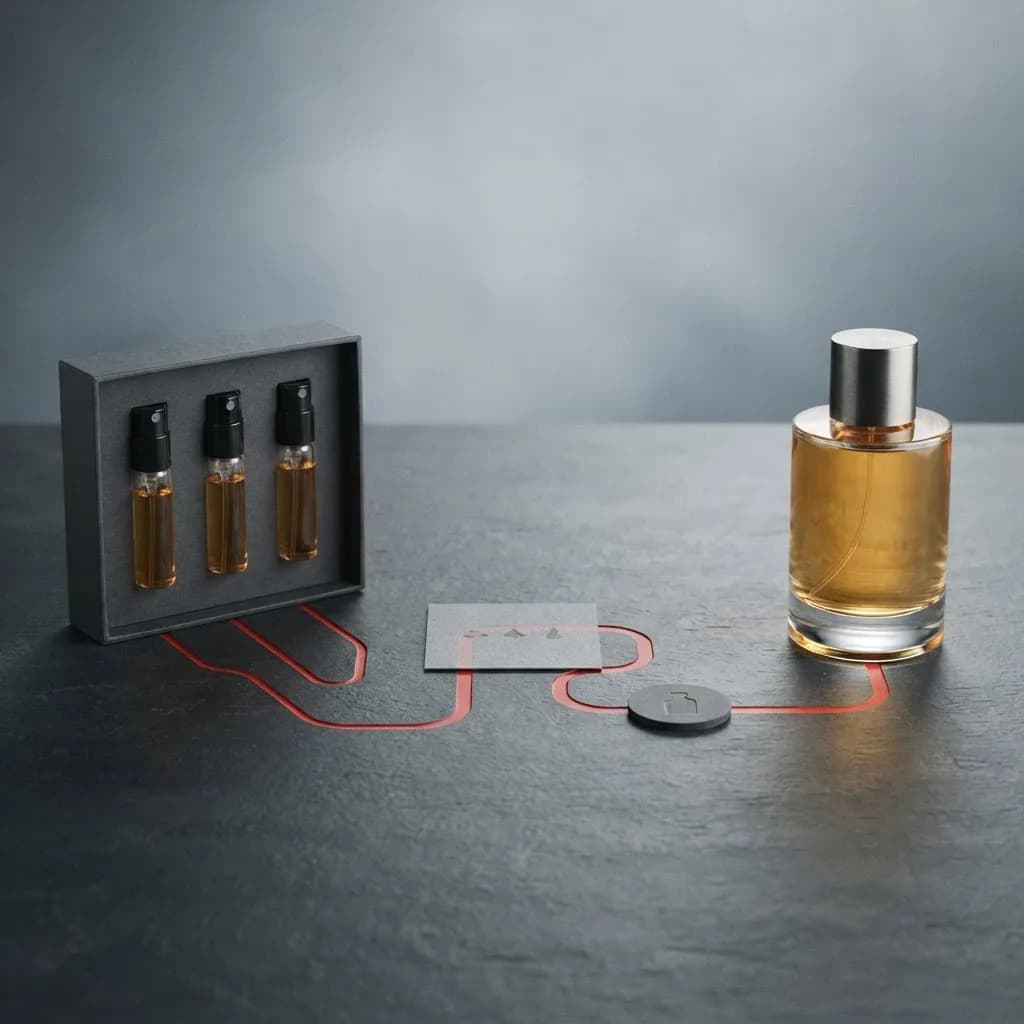
Discovery Sets That Convert: From Sampling to Full-Bottle Sales
How to structure the offer, follow-up journey and economics of a discovery set so that sampling becomes a measurable acquisition channel.
Stop funding the wrong problem
Find the constraint already costing buyers and margin.
Submit the brand for a fit review first. No payment or platform access is required at application; accepted diagnostics start at $300, and implementation is optional.